In This Article
If you're a hearing aid user, you'll know how much they can improve your quality of life. They help you connect with the world, enjoy conversations, and stay engaged. But what happens when something subtle, something you might not even notice at first, starts to interfere with their performance? We're talking about earwax, or cerumen, and its often-overlooked link to hearing aid malfunctions. It's a common issue, and honestly, it can be really frustrating when your hearing aids aren't working as they should. You might be wondering why they're whistling, sounding muffled, or even seem to have stopped working altogether. Well, you're not alone, and we're here to shed some light on this often-misunderstood connection.
Here at Earwax Removal Devon, we see firsthand how earwax can impact hearing aid users. Eleni, our qualified ear care specialist, understands these challenges. Let's look at how ear canal occlusion can subtly, yet significantly, affect your hearing aids, and what you can do about it.
What Happens When Earwax Meets Your Hearing Aid?
Think about it this way: your ear canal is a finely tuned pathway for sound. When earwax builds up and creates an occlusion – essentially a blockage – it changes everything. This isn't just about reduced hearing; it's about how your hearing aid interacts with that blockage, leading to a cascade of problems. Cerumen occlusion, as it's clinically known, is a common culprit behind many hearing aid woes [1].
The Whistle You Can't Ignore: Acoustic Feedback Loops
One of the most common and annoying issues caused by earwax occlusion is acoustic feedback. You know that whistling or squealing sound? That's feedback, and it happens when sound from your hearing aid's receiver (the speaker) leaks out of your ear and gets picked up by its microphone again. It's a loop, and earwax can create the perfect conditions for it.
Here's what I mean: a properly fitted hearing aid creates a seal in your ear canal, directing sound inwards. But if there's a lump of earwax, it can prevent that seal from forming correctly. The sound waves, instead of travelling efficiently to your eardrum, bounce off the earwax blockage and escape, only to be re-amplified by the hearing aid. It's like holding a microphone too close to a speaker – you get that high-pitched squeal [2]. This can be particularly noticeable with certain types of hearing aids and can significantly reduce the effectiveness of your device.
The Physics of Sound: How Occlusion Changes Everything
Let's get a little technical for a moment, but don't worry, we'll keep it straightforward. Sound travels as waves. In an open, clear ear canal, these waves move freely towards your eardrum. When earwax creates an occlusion, it acts as a physical barrier. This barrier can reflect sound waves, changing their direction and intensity. It can also absorb some of the sound, making it harder for the sound to reach your eardrum effectively. The presence of this mass in the ear canal can alter the natural resonance of the ear, affecting how you perceive sound, even your own voice [3].
This altered sound transmission isn't just about volume; it affects clarity and how your hearing aid processes sound. The hearing aid is trying to compensate for a hearing loss, but it's now working against a physical obstruction that's distorting the sound before it even reaches the eardrum. This can lead to a muffled sound quality or a feeling that your hearing aid isn't performing as well as it should.
When Earwax Attacks: Receiver Damage
It's not just about sound quality; earwax can physically damage your hearing aid, especially the receiver. The receiver is a delicate component, and it's designed to deliver sound directly into your ear canal. When earwax builds up, it can clog the receiver's tiny opening. This isn't just a superficial blockage; the earwax can get pushed deeper into the receiver, causing internal damage.
Honestly, we've seen cases where earwax has completely blocked the receiver, making the hearing aid appear broken when it simply needs a thorough cleaning or repair [4]. The moisture and acidity in earwax can also corrode the delicate electronics within the receiver over time, leading to costly repairs or even replacement. Regular maintenance and professional earwax removal are key to preventing this kind of damage.
The Occlusion Effect: More Than Just a Blockage
Beyond the direct physical interference, ear canal occlusion can lead to what audiologists call the occlusion effect. This is that sensation where your own voice sounds louder, deeper, or hollow when your ear canal is blocked. It's a common complaint among new hearing aid users, especially with certain types of fittings [5].
Here's why it happens: when your ear canal is sealed, either by earwax or a hearing aid mould, the vibrations from your own voice can't escape as easily. They're trapped, and they resonate within your ear canal, amplifying the low-frequency sounds of your own voice and chewing. It can be quite disorienting, and it's a significant factor audiologists consider during hearing aid fitting. While the hearing aid itself can contribute to the occlusion effect, excessive earwax can certainly exacerbate it, making the sensation much more pronounced and uncomfortable.
BTE vs. ITE: Different Aids, Different Impacts
Not all hearing aids are affected by earwax occlusion in the same way. There are two main categories: Behind-The-Ear (BTE) and In-The-Ear (ITE) aids. Understanding the differences can help you anticipate potential issues.
Behind-The-Ear (BTE) Hearing Aids: These aids sit behind your ear, with a tube connecting to an earmould or dome in your ear canal. With BTE aids, the main unit is outside the ear, so it's less directly exposed to earwax. However, the earmould or dome can still become blocked with cerumen, leading to acoustic feedback or a muffled sound. The tubing can also get clogged, reducing sound transmission. But the core electronic components are generally safer from direct earwax ingress.
In-The-Ear (ITE) Hearing Aids: These aids fit entirely within your ear canal or outer ear. This design makes them more discreet, but it also means they're more susceptible to earwax issues. The microphone, receiver, and vents are all much closer to, or directly in, the ear canal, making them prime targets for earwax accumulation. This can lead to:
- Increased risk of receiver blockage: As mentioned, earwax can easily clog the sound outlet.
- More frequent acoustic feedback: A poor seal due to earwax is more likely to cause feedback.
- Damage to internal components: The proximity to earwax increases the chance of corrosion or physical damage to the delicate electronics.
- Occlusion effect: ITE aids, by their very nature of filling the ear canal, can contribute to the occlusion effect, and earwax only makes it worse.
It's not that one type is inherently better or worse; it's about understanding their vulnerabilities and how to best care for them. Regular cleaning and professional earwax management are even more important for ITE users.
Clinical Evidence: What Audiology Literature Tells Us
Audiology literature consistently highlights the impact of cerumen on hearing aid performance. Studies and clinical guidelines, such as those from the National Institute for Health and Care Excellence (NICE), underscore the importance of managing earwax, especially for hearing aid users [6].
For instance, NICE guideline NG207 on earwax removal, while primarily focusing on the removal process, implicitly acknowledges the problems earwax can cause, including its interference with hearing aids. It recommends that earwax removal should be considered for people with hearing aids if earwax is contributing to their hearing difficulties or preventing the proper fitting or function of their hearing aid [7].
Research has shown that cerumen impaction is a common reason for hearing aid malfunction and patient dissatisfaction. A significant percentage of hearing aid repairs are directly attributable to earwax ingress [8]. This isn't just an anecdotal observation; it's a well-documented clinical reality. The presence of excess cerumen can lead to a poor acoustic seal, which in turn causes feedback. It can also physically block the sound bore, reducing the sound output and making the hearing aid seem underpowered or faulty [9].
Furthermore, the long-term presence of earwax can create a moist environment that can foster bacterial growth, potentially leading to ear infections, which can further complicate hearing aid use and ear health [10]. This is why regular ear health checks and appropriate earwax management are so important for anyone using hearing aids.
Managing Earwax and Your Hearing Aids: Practical Guidance
So, what can you do to prevent these issues and keep your hearing aids working optimally? It really comes down to proactive management and understanding the role of professional ear care. You see, while earwax is natural and serves a protective purpose, too much of a good thing can cause problems, especially when you’re using hearing aids.
What to Expect: Signs Your Hearing Aid Might Be Struggling with Earwax
It’s important to be aware of the signs that earwax might be affecting your hearing aids. Catching these issues early can prevent more significant problems and discomfort. Look out for:
- Reduced sound quality: Your hearing aids might sound muffled, weak, or inconsistent.
- Intermittent sound: The sound might cut in and out.
- Increased feedback/whistling: More frequent or louder whistling than usual.
- Discomfort or pressure: A feeling of fullness or pain in your ear.
- Visible earwax: You might see earwax on your hearing aid or in your ear canal.
- Hearing aid appearing ‘dead’: In severe cases, a complete blockage can make your hearing aid seem like it’s not working at all.
If you notice any of these signs, it’s a good idea to consider professional earwax removal. Don’t try to remove earwax yourself with cotton buds or other objects, as this can push the wax deeper, making the problem worse and potentially damaging your ear canal or eardrum [7].
The Role of Professional Earwax Removal
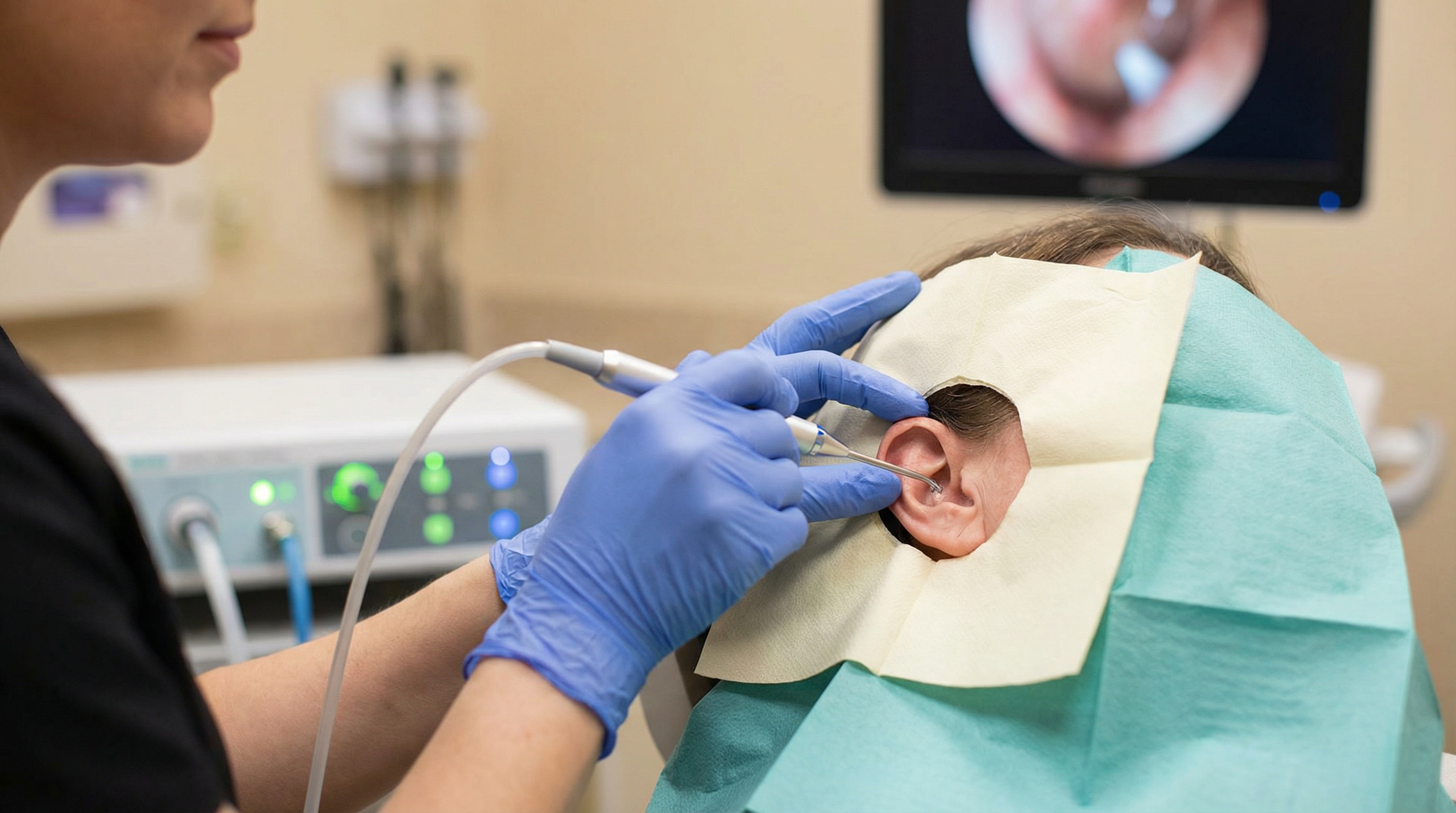
This is where professional help comes in. At Earwax Removal Devon, we offer safe, effective, and gentle earwax removal services. Eleni is highly trained in techniques like microsuction and ear irrigation, which are considered the safest and most effective methods for removing earwax [7].
- Microsuction: This is a gentle and precise method using a medical suction device to remove earwax. It’s often preferred because it’s performed under direct vision using a microscope, making it very safe and effective. You can learn more about microsuction on our services page [/services/microsuction].
- Ear Irrigation: This involves carefully flushing the ear canal with warm water to dislodge and remove earwax. It’s a safe and comfortable procedure when performed by a qualified professional. Find out more about ear irrigation here [/services/ear-irrigation].
Regular professional earwax checks and removal can significantly prolong the life of your hearing aids, improve their performance, and ensure your continued comfort and hearing health. It’s a small step that makes a big difference.
Broader Implications: Why Ear Health Matters for Hearing Aid Users
Maintaining good ear hygiene isn’t just about preventing hearing aid malfunctions; it’s about your overall ear health. Untreated earwax impaction can lead to a range of issues beyond hearing aid problems, including temporary hearing loss, earache, tinnitus (ringing in the ears), and even infections [1]. For hearing aid users, these issues can be particularly disruptive, as they can further complicate the management of existing hearing loss.
Think about it: your hearing aids are an investment in your quality of life. Protecting that investment means taking care of the environment they operate in – your ears! Regular check-ups and professional cleaning are part of a holistic approach to managing your hearing health. It’s about ensuring that your hearing aids can do their job effectively, without unnecessary interference from earwax.
Comparing Hearing Aid Types and Earwax Impact
To help you understand the differences, here’s a quick comparison of how earwax typically affects BTE and ITE hearing aids:
| Feature | Behind-The-Ear (BTE) Hearing Aids | In-The-Ear (ITE) Hearing Aids |
|---|---|---|
| Placement | Main unit behind the ear, tube/mould in ear canal | Entirely within the ear canal or outer ear |
| Earwax Exposure | Earmould/dome and tubing exposed to earwax | Microphone, receiver, vents directly exposed to earwax |
| Feedback Risk | Can occur if earmould/dome is blocked or poorly fitted | Higher risk due to direct exposure and smaller vents |
| Receiver Damage | Less common for main unit; earmould/tube blockages are primary concern | Higher risk of direct earwax ingress and damage to receiver |
| Occlusion Effect | Can occur, but often less pronounced than ITE | More pronounced due to full ear canal blockage |
| Maintenance | Regular cleaning of earmould/dome and tubing | More frequent and meticulous cleaning of the entire device |
| Professional Care | Important for earmould/tube cleaning and earwax removal | Even more critical for device longevity and performance |
Ready to Hear Clearly Again?
If you’re experiencing issues with your hearing aids, or suspect earwax might be the culprit, don’t wait. We’re here to help you get back to hearing your best. Give us a call on 01769 302119 or book online at earwaxremovaldevon.com to schedule your professional earwax removal appointment with Eleni. We’ll ensure your ears are clear and your hearing aids can perform as they should.
References
[1] Roland, P. S., Smith, T. L., Schwartz, S. R., Rosenfeld, R. M., Alam, S., Marzouk, H., ... & American Academy of Otolaryngology—Head and Neck Surgery Foundation. (2008). Clinical practice guideline: Cerumen impaction. Otolaryngology—Head and Neck Surgery, 139(3_suppl), S1-S21. https://aao-hnsfjournals.onlinelibrary.wiley.com/doi/10.1016/j.otohns.2008.06.026
[2] Agnew, J. (1996). Acoustic feedback and other audible artifacts in hearing aids. Trends in Amplification, 1(2), 53-64. https://pmc.ncbi.nlm.nih.gov/articles/PMC4172233/
[3] Stenfelt, S., & Reinfeldt, S. (2007). A model of the occlusion effect with bone-conducted stimulation. Journal of the Acoustical Society of America, 122(3), 1542-1551.
[4] Quest Products Inc. (2022). Effects of Excess Earwax on Hearing Aids a “Must Know”. https://questproductsinc.com/blogs/news/effects-of-excess-earwax-on-hearing-aids-a-must-know-due-to-fda-rule-change
[5] Killion, M. C. (1988). The K-Amp hearing aid: An audiological overview. Hearing Instruments, 39(8), 28-30.
[6] National Institute for Health and Care Excellence. (2018). Hearing loss in adults: assessment and management (NG98). https://www.nice.org.uk/guidance/ng98
[7] National Institute for Health and Care Excellence. (2021). Earwax removal (NG207). https://www.nice.org.uk/guidance/ng207
[8] Charleston ENT & Allergy. (2022). How to Avoid Earwax Buildup with Hearing Aids. https://charlestonent.com/how-to-avoid-earwax-buildup-with-hearing-aids/
[9] HearingDocs. (2025). How Earwax Affects Your Hearing Aid Performance. https://hearingdocs.com/blog/how-earwax-affects-hearing-aid-performance
[10] Roland, P. S., Smith, T. L., Schwartz, S. R., Rosenfeld, R. M., Alam, S., Marzouk, H., ... & American Academy of Otolaryngology—Head and Neck Surgery Foundation. (2017). Clinical practice guideline: Cerumen impaction (update). Otolaryngology—Head and Neck Surgery, 156(1_suppl), S1-S29. https://aao-hnsfjournals.onlinelibrary.wiley.com/doi/abs/10.1177/0194599816671491
