In This Article
Hello there! If you're reading this, chances are you've been bothered by earwax and are looking for a solution. Perhaps you've even considered trying to sort it out yourself. Honestly, it's a common thought. We all want to hear clearly and feel comfortable, don't we? But when it comes to something as delicate as your ears, it's natural to wonder about the safest way to go about it. You might be asking, "What are the risks involved in earwax removal, and how can I avoid them?" That's a really sensible question, and I'm here to help you understand it all, just like a trusted friend who happens to be a clinician.
Let's talk openly about the potential pitfalls, especially when you try to tackle earwax at home. It's tempting, I know, to reach for a cotton bud or a DIY kit, but these can actually do more harm than good. Think about it this way: your ear canal is a delicate, curved pathway, not a straight tube. Inserting objects into it can lead to several problems.
The Perils of DIY Earwax Removal
When you try to remove earwax yourself, you're often working blind, and that's where the trouble starts. Here's what I mean:
Canal Abrasion and Injury
One of the most immediate risks is canal abrasion, which is essentially scratching or damaging the delicate skin lining your ear canal. Cotton buds, ear picks, or even your finger can easily cause tiny cuts and scrapes. These aren't just uncomfortable; they create perfect entry points for bacteria, significantly increasing your risk of developing an ear infection, known as otitis externa [1].
Pushing Wax Deeper
Another common issue with DIY methods, particularly cotton buds, is that instead of removing the wax, you often end up pushing it deeper into the ear canal [2]. This compacts the wax against your eardrum, making the blockage worse and much harder to remove professionally. It can also lead to increased hearing loss, a feeling of fullness, and even pain. It's a bit like trying to clear a blocked drain with a plunger that just shoves the blockage further down the pipe.
Perforated Eardrum
Perhaps the most serious risk of all is a perforated eardrum (tympanic membrane perforation). This is a hole or tear in the thin tissue that separates your ear canal from your middle ear. It can happen if an object is inserted too far or too forcefully into the ear. A perforated eardrum can cause sudden pain, hearing loss, tinnitus (ringing in the ear), and discharge. While many perforations heal on their own, some may require surgery, and there's always a risk of permanent hearing damage [3]. It's a scary thought, isn't it? And it's why we strongly advise against putting anything smaller than your elbow in your ear.
Risks of Professional Earwax Removal Methods
Now, you might be thinking, "Okay, DIY is out. What about professional methods?" It's true that professional removal is much safer, but it's still good to be aware of the potential risks associated with different techniques. Let's look at two common methods: ear syringing (now more accurately called ear irrigation) and microsuction.
Ear Syringing (Ear Irrigation)
Ear irrigation involves using a controlled jet of warm water to flush the wax out of the ear canal. While it can be effective, it's not without its risks, and NICE (the National Institute for Health and Care Excellence) has actually recommended against manual syringing [4]. Here’s why:
- Dizziness and Vertigo: The introduction of water into the ear can sometimes affect your balance system, leading to temporary dizziness or a spinning sensation (vertigo).
- Tinnitus: Some people experience temporary or, in rare cases, worsening tinnitus after ear irrigation.
- Otitis Externa: If the ear canal isn't dried properly after the procedure, the moist environment can encourage bacterial growth, leading to an outer ear infection.
- Perforated Eardrum: Although less common than with DIY methods, there is still a small risk of eardrum perforation, especially if the water pressure is too high or if there's a pre-existing weakness in the eardrum [5].
Microsuction
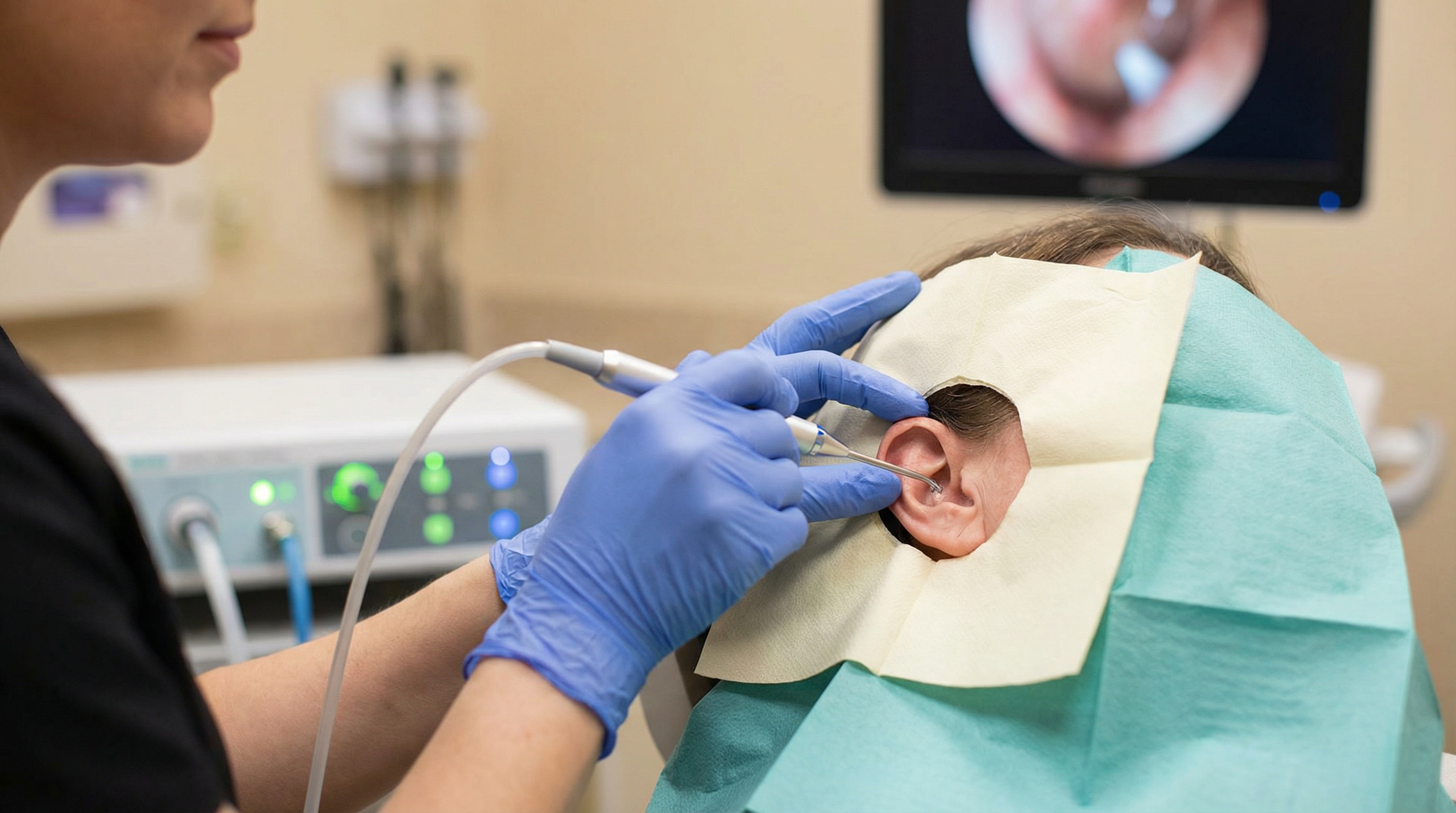
Microsuction is considered the gold standard for earwax removal by many clinicians. It involves using a small suction device and a microscope to see inside the ear canal and gently vacuum out the wax. It's a dry procedure, which reduces the risk of infection. However, like any procedure, it's not entirely without risk:
- Temporary Tinnitus or Hearing Changes: The noise from the suction can sometimes cause a temporary ringing in the ears or a slight shift in your hearing. This usually settles down very quickly.
- Minor Discomfort: Some people find the sensation of suction a little strange or ticklish, but it's rarely painful. If the wax is very hard and stuck to the ear canal wall, there might be some minor discomfort during removal.
- Dizziness: As with irrigation, some people might experience a brief spell of dizziness, but this is less common with microsuction.
Here’s a table to help you compare the risks at a glance:
| Risk | DIY Methods (e.g., Cotton Buds) | Ear Irrigation (Syringing) | Microsuction |
|---|---|---|---|
| Canal Abrasion/Injury | High | Low | Very Low |
| Pushing Wax Deeper | High | Low | Very Low |
| Eardrum Perforation | Moderate | Low | Very Low |
| Infection (Otitis Externa) | High | Moderate | Low |
| Dizziness/Vertigo | Low | Moderate | Low |
| Tinnitus | Possible | Possible | Possible (usually temporary) |
How Professional Assessment Reduces Risk
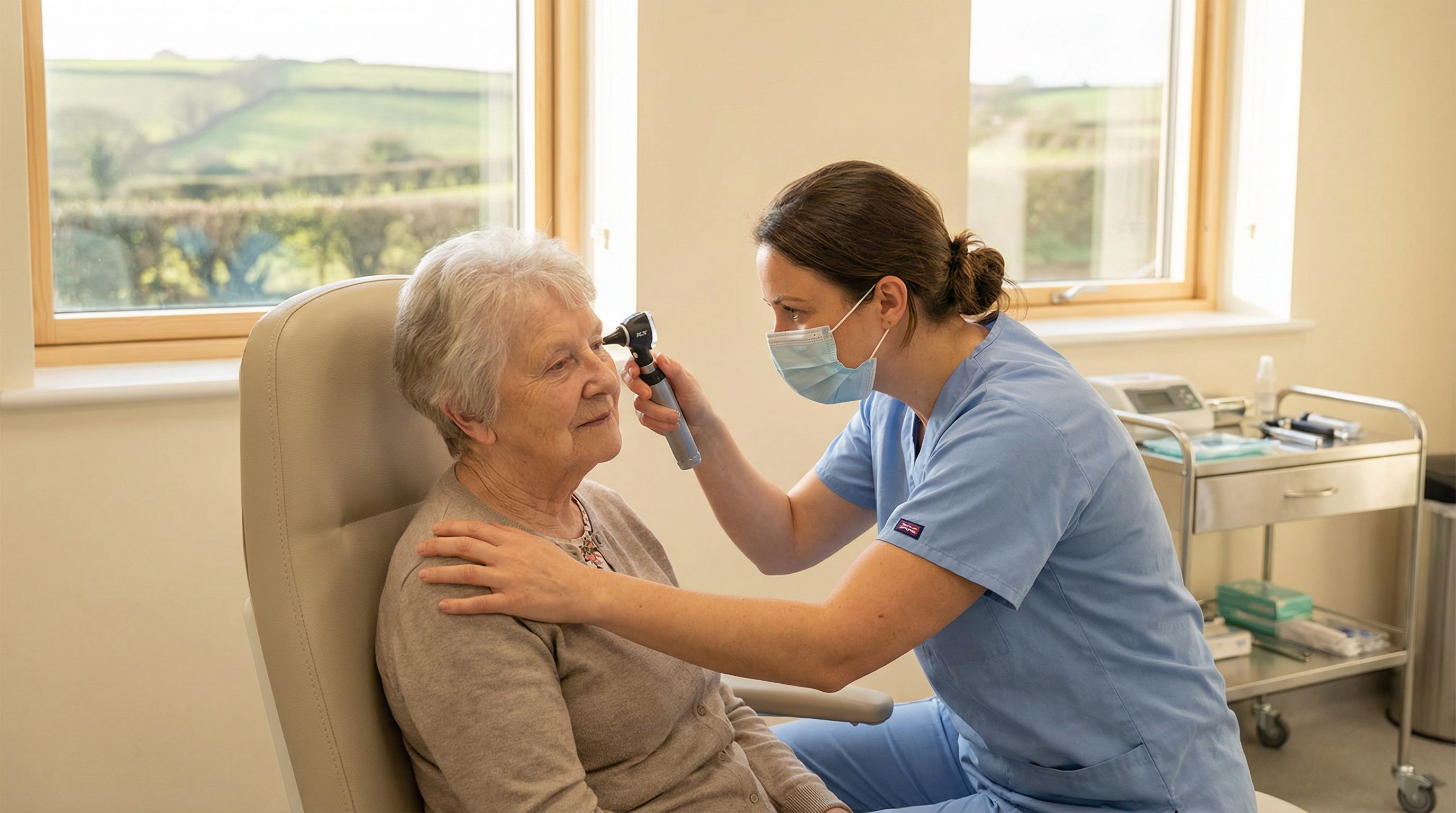
Honestly, the biggest way to avoid risks is to get a professional assessment. When you visit a qualified practitioner, they don't just jump straight into removal. They'll first take a detailed medical history and examine your ears thoroughly using an otoscope or a video otoscope. This allows them to:
- Assess the ear canal and eardrum: They can check for any pre-existing conditions, such as perforations, infections, or inflammation, that might make certain removal methods unsuitable.
- Determine the type and consistency of the earwax: Is it soft and easy to remove, or hard and impacted? This helps them choose the most appropriate and safest method.
- Identify any contraindications: Certain medical conditions or medications might mean that some removal techniques are not safe for you. A professional will know what to look for.
This initial assessment is absolutely crucial. It means the removal process is tailored to your specific needs, significantly reducing the chances of complications. Think about it this way: you wouldn't try to fix a complex plumbing issue without knowing what's going on behind the walls, would you? Your ears are far more intricate!
What NICE Guidelines Say About Safe Removal
When it comes to best practices in healthcare, we often look to guidelines from organisations like NICE. The National Institute for Health and Care Excellence (NICE) provides evidence-based recommendations for health and social care in England. Their guideline NG98, which covers hearing loss in adults, includes important recommendations on earwax removal [6].
Specifically, NICE guideline NG98, recommendation 1.2.1, states that earwax should be removed for adults in primary care or community ear care services if it's contributing to hearing loss or other symptoms, or if it needs to be removed to examine the ear or take an impression of the ear canal [7].
Here are some key takeaways from NICE regarding safe earwax removal:
- Avoid Manual Syringing: NICE guideline NG98, recommendation 1.2.2, explicitly advises against manual syringing to remove earwax [8]. This is due to the higher risk of complications compared to other methods.
- Consider Electronic Irrigation, Microsuction, or Manual Removal: For adults, NICE recommends considering ear irrigation using an electronic irrigator, microsuction, or another method like manual removal with a probe [9]. However, this comes with important caveats: the practitioner must have training and expertise, be aware of any contraindications, and have the correct equipment available.
- Pre-treatment for Irrigation: If ear irrigation is used, pre-treatment wax softeners, such as earwax removal drops, should be used, either immediately before or for up to 5 days beforehand [10]. If the first attempt is unsuccessful, repeat the wax softeners or instil water 15 minutes before a second attempt. If still unsuccessful, referral to a specialist ear care service is recommended.
- No Small Objects in the Ear: NICE guideline NG98, recommendation 1.2.5, advises adults not to remove earwax or clean their ears by inserting small objects, such as cotton buds, into the ear canal. They explain that this could damage the ear canal and eardrum, and push the wax further down [11]. This aligns perfectly with what we discussed about DIY risks. It's a clear message: leave it to the professionals.
These guidelines underscore the importance of professional, informed care when dealing with earwax. They're there to protect you and ensure you receive the safest and most effective treatment.
Choosing a Qualified Practitioner
So, if DIY is out and even professional methods have their nuances, how do you ensure you're in safe hands? Choosing a qualified practitioner is paramount. Here's what to look for:
- Training and Experience: Ensure your practitioner has specific training and experience in earwax removal. Ask about their qualifications and how often they perform the procedure. For instance, our clinicians at Earwax Removal Devon are highly trained and experienced in both microsuction and ear irrigation.
- Adherence to Guidelines: A good practitioner will follow national guidelines, such as those from NICE. They'll explain the procedure, potential risks, and ensure you're comfortable and informed every step of the way.
- Proper Equipment: They should use appropriate, well-maintained equipment, such as a microscope or endoscope for clear visualisation during microsuction, and an electronic irrigator for ear irrigation.
- Professional Assessment: As mentioned, a thorough initial assessment is a hallmark of a qualified professional. They won't just start removing wax without understanding your ear health history.
Don't be afraid to ask questions! A reputable clinician will be happy to discuss their methods and put your mind at ease. Your ear health is too important to leave to chance.
Ready to Hear Clearly Again?
We understand that dealing with earwax can be frustrating, and finding a safe, effective solution is your top priority. At Earwax Removal Devon, we pride ourselves on providing expert, patient-centred care, adhering to the highest clinical standards, including NICE guidelines. Our friendly and experienced clinicians are here to help you hear clearly and comfortably once more.
Whether you're experiencing hearing loss, discomfort, or just need a routine check, we're here for you. We offer same-day appointments for urgent needs and can even provide home visits for your convenience. Our dedicated clinic in South Molton is equipped with the latest technology to ensure a safe and effective earwax removal experience.
Don't let earwax hold you back any longer. Take the first step towards clearer hearing and peace of mind. Give us a call today on 01769 302119 to book your appointment. We look forward to helping you!
References
[1] Healthline. Microsuction for Earwax Removal: Benefits and Side Effects. Available at: https://www.healthline.com/health/microsuction
[2] Healthline. Ear Irrigation: Purpose, Procedures and Risks. Available at: https://www.healthline.com/health/ear-irrigation
[3] Medical News Today. Ear irrigation: Procedure, safety, and side effects. Available at: https://www.medicalnewstoday.com/articles/325857
[4] NICE. Quality statement 1: Earwax removal | Hearing loss in adults. Available at: https://www.nice.org.uk/guidance/qs185/chapter/quality-statement-1-earwax-removal
[5] Regain Hearing. Common side effects and problems after ear syringing. Available at: https://www.regainhearing.co.uk/blog/what-are-the-side-effects-of-ear-syringing/
[6] NICE. Hearing loss in adults: assessment and management. Available at: https://www.nice.org.uk/guidance/ng98
[7] NICE. Hearing loss in adults: assessment and management. Recommendation 1.2.1. Available at: https://www.nice.org.uk/guidance/ng98/chapter/Recommendations#removing-earwax
[8] NICE. Hearing loss in adults: assessment and management. Recommendation 1.2.2. Available at: https://www.nice.org.uk/guidance/ng98/chapter/Recommendations#removing-earwax
[9] NICE. Hearing loss in adults: assessment and management. Recommendation 1.2.3. Available at: https://www.nice.org.uk/guidance/ng98/chapter/Recommendations#removing-earwax
[10] NICE. Hearing loss in adults: assessment and management. Recommendation 1.2.4. Available at: https://www.nice.org.uk/guidance/ng98/chapter/Recommendations#removing-earwax
[11] NICE. Hearing loss in adults: assessment and management. Recommendation 1.2.5. Available at: https://www.nice.org.uk/guidance/ng98/chapter/Recommendations#removing-earwax