
In This Article
It’s frustrating, isn't it? You rely on your hearing aids to connect with the world, and then suddenly, things sound muffled, or worse, they stop working altogether. Often, the culprit is earwax, but not just any earwax – we're talking about that thicker, stickier, more viscous earwax that seems to have a knack for finding its way into the most delicate parts of your device. If you're a hearing aid user, you've probably experienced this challenge, and honestly, it can be a real nuisance. But don't worry, you're not alone, and there are effective ways to manage it.
Here at Earwax Removal Devon, we understand how important your hearing is and how a blocked hearing aid can disrupt your daily life. Eleni, our qualified ear care specialist, sees this issue frequently, and we're here to help you understand why it happens and what you can do about it. Let's look at why some people produce this kind of earwax and, more importantly, how we can keep your hearing aids clear and working perfectly.
What Exactly is Viscous Earwax, and Why Does it Cause Trouble?
Earwax, or cerumen, is a natural, protective substance your body produces. It cleans, lubricates, and protects your ear canal from bacteria, fungi, and water. But cerumen isn't a one-size-fits-all kind of thing. It comes in different types, primarily wet and dry. Viscous earwax falls into the 'wet' category, and it's typically softer, stickier, and often darker in colour. Think about it this way: dry earwax might be crumbly, but viscous earwax is more like treacle – thick and gooey.
The Sticky Problem: How Viscous Wax Blocks Hearing Aid Ports
Now, when this thicker, stickier wax comes into contact with your hearing aid, it presents a unique challenge, especially for the tiny openings of the receiver ports (where sound comes out) and microphone inlets (where sound goes in). Dry wax can also cause blockages, but it tends to be more easily dislodged or brushed away. Viscous wax, on the other hand, adheres more stubbornly. It can:
- Form a tenacious seal: The sticky nature of viscous wax allows it to create a tight seal over the delicate openings, effectively blocking sound transmission or reception.
- Clog fine meshes: Hearing aids often have tiny mesh filters or wax guards designed to protect the internal components. Viscous wax can quickly gum up these fine meshes, making them impermeable to sound.
- Resist simple cleaning: Unlike dry, flaky wax that might be removed with a brush, viscous wax often requires more thorough cleaning, as it smears rather than breaks apart.
This is why you might find your hearing aid suddenly cutting out, producing distorted sound, or simply not working, even after a quick wipe. The wax is just too good at sticking around.
Why Some People Produce Thicker, More Viscous Cerumen
So, why do some of us seem to be magnets for this sticky stuff? It's not just bad luck; several factors contribute to the type and amount of earwax you produce. It's really quite fascinating how our bodies work.
The Genetic Link: It's in Your DNA
One of the biggest determinants of your earwax type is your genetics. Specifically, a gene called ABCC11 plays a significant role [1]. This gene dictates whether you'll have wet (viscous) or dry earwax. Most people of European and African descent tend to have wet, viscous earwax, while dry, flaky earwax is more common among East Asian populations. It's a simple genetic variation, but it has a big impact on your ear care needs. If you have the genetic predisposition for wet earwax, you're more likely to experience issues with viscous blockages.
Other Contributing Factors
While genetics is a major player, other elements can influence the consistency and quantity of your earwax:
- Age: As we get older, our earwax can become drier and harder, but for some, the glands might produce more, or it might become more impacted due to changes in the ear canal's self-cleaning mechanism.
- Diet: While direct scientific evidence is limited, some theories suggest that a diet high in certain fats or cholesterol might influence earwax consistency. However, this area requires more research.
- Climate: Living in a humid environment might lead to slightly softer earwax, while very dry climates could contribute to drier, harder wax. However, the primary influence on viscosity remains genetic.
- Ear Canal Shape: Narrow or unusually shaped ear canals can impede the natural migration of earwax out of the ear, leading to buildup and impaction, regardless of its consistency.
- Hearing Aid Use: Wearing hearing aids can sometimes interfere with the natural outward migration of earwax, pushing it back into the canal and contributing to blockages. This is a common issue for many users.
Practical Strategies for Managing Viscous Earwax
Dealing with viscous earwax when you wear hearing aids requires a proactive approach. It's about prevention and timely intervention to keep your hearing clear and your devices functioning.
At-Home Care: Softening Drops and Daily Cleaning
For many, a good starting point is regular at-home care. This includes:
- Earwax Softening Drops: Over-the-counter earwax softening drops, often containing olive oil, almond oil, or carbamide peroxide, can be very effective. They work by breaking down the wax, making it softer and easier for your ear to expel naturally. Apply them as directed, usually for a few days, before attempting any other cleaning. Always follow the instructions carefully, and if you have any ear infections or a perforated eardrum, avoid using drops and consult a professional.
- Daily Hearing Aid Cleaning: Make it a habit to clean your hearing aids every single day. Use the brush and wax pick provided with your hearing aid to gently clear any visible wax from the receiver port, microphone inlets, and vents. For viscous wax, a soft, dry cloth can help wipe away surface residue. Be gentle, though; those components are delicate.
Wax Guards: Your First Line of Defence
Wax guards are tiny filters designed to protect the receiver of your hearing aid from earwax. If you have viscous earwax, you'll likely find yourself changing these more frequently than someone with dry wax. Here's what I mean:
| Earwax Type | Wax Guard Frequency (General) | Impact on Hearing Aid |
|---|---|---|
| Dry, Flaky | Every few weeks to a month | Less frequent blockages, easier to clean |
| Wet, Viscous | Weekly to every few days | More frequent blockages, harder to clean, critical for device longevity |
It's really important to keep an eye on your wax guards. If you notice sound becoming muffled, or if there's visible wax on the guard, it's time for a change. Your audiologist can show you how to do this correctly.
Professional Earwax Removal: When to Seek Help
Sometimes, despite your best efforts, viscous earwax can build up and become impacted, or it might just be too stubborn for at-home methods. This is when professional earwax removal becomes not just helpful, but important. The National Institute for Health and Care Excellence (NICE) guideline NG207 on earwax removal highlights the importance of professional intervention when earwax causes hearing loss or interferes with hearing aid use [2].
At Earwax Removal Devon, we offer safe and effective methods for removing even the most viscous and impacted earwax:
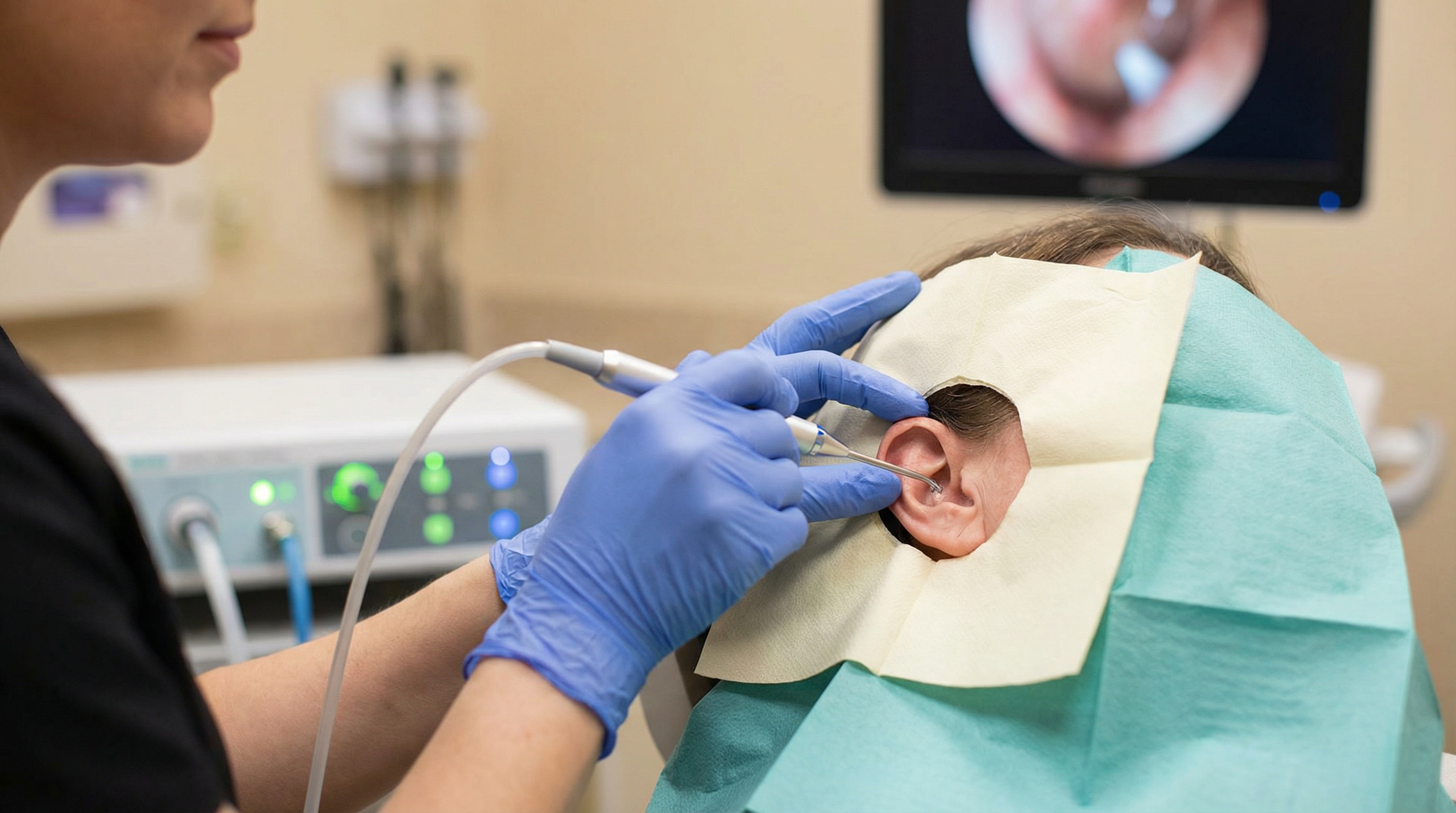
- Microsuction: This is often considered the gold standard for earwax removal. It uses a gentle suction pump and a microscope to precisely and safely remove earwax from the ear canal. It's a quick, clean, and highly effective method, especially for viscous wax, as it doesn't involve water and allows for direct visualisation.
- Ear Irrigation: Formerly known as ear syringing, modern ear irrigation uses a controlled flow of warm water to gently flush out earwax. It's a safe and effective method for many, though not suitable for everyone (e.g., those with perforated eardrums or certain ear conditions).
Eleni will assess your ears and recommend the most appropriate and safest method for your specific situation. We'll make sure you're comfortable throughout the process.
Audiologist Recommendations for Viscous Earwax Users
Your audiologist is your best ally in managing viscous earwax and ensuring your hearing aids perform optimally. They'll often recommend:
- Regular Check-ups: Schedule routine appointments for ear health checks and professional earwax removal. For those with viscous earwax, this might be more frequent, perhaps every 3-6 months, depending on your individual wax production.
- Proper Hearing Aid Care Training: Ensure you're confident in cleaning your hearing aids daily and changing wax guards. Don't be afraid to ask for a refresher if you need one.
- Customised Advice: Your audiologist can provide personalised advice on earwax softening drops, cleaning techniques, and the best wax guard type for your specific hearing aids and earwax consistency.
Look, dealing with viscous earwax can be a bit of a challenge, but with the right knowledge and support, it's completely manageable. Keeping your hearing aids clear means you can continue to enjoy clear sound and stay connected.
Ready to get your hearing aids working perfectly again? Don't let viscous earwax get in the way of your hearing. Book an appointment with Eleni at Earwax Removal Devon today. You can call us on 01769 302119 or book online at earwaxremovaldevon.com. We're here to help you hear your best.
References
[1] Yoshiura, K., Kinoshita, A., Ishida, T., et al. (2006). A SNP in the ABCC11 gene is the determinant of human earwax type. Nature Genetics, 38(3), 324-330. [2] National Institute for Health and Care Excellence. (2019). Earwax removal (NG207). Available at: https://www.nice.org.uk/guidance/ng207
